
Introduction
Truffles are underground fungi belonging to the genus Tuber. Actually with the word truffles we mean the fruiting body of the subterranean mycelium of the genus Tuber. Unlike mushrooms that grow above ground, truffles develop beneath the soil surface, forming a close, symbiotic relationship with the roots of certain host trees. This symbiotic relationship makes them both ecologically important and economically valuable. The unique growth conditions and rarity of truffles combined with their intense flavor, have made them a symbol of mystery and luxury in gastronomy worldwide.
Taxonomy and Main Varieties
Truffles belong to the phylum Ascomycota, and there are several species that differ in aroma, appearance, and habitat. The main truffle varieties include:
- Perigold Black Truffle (Tuber melanosporum)
- Precious White Truffle (Tuber magnatum pico)
- Black Summer Truffle – Scorzone (Tuber aestivum)
- Burgundy Black Truffle (Tuber Uncinatum)
- Bianchetto Truffle (Tuber borchii)
- Winter Black Truffles (Tuber Brumale)
Each species has specific growth conditions, preferred host trees, and distinct seasonal patterns.
The Tree Connection
Truffles communicate with their host tree via chemical signals.
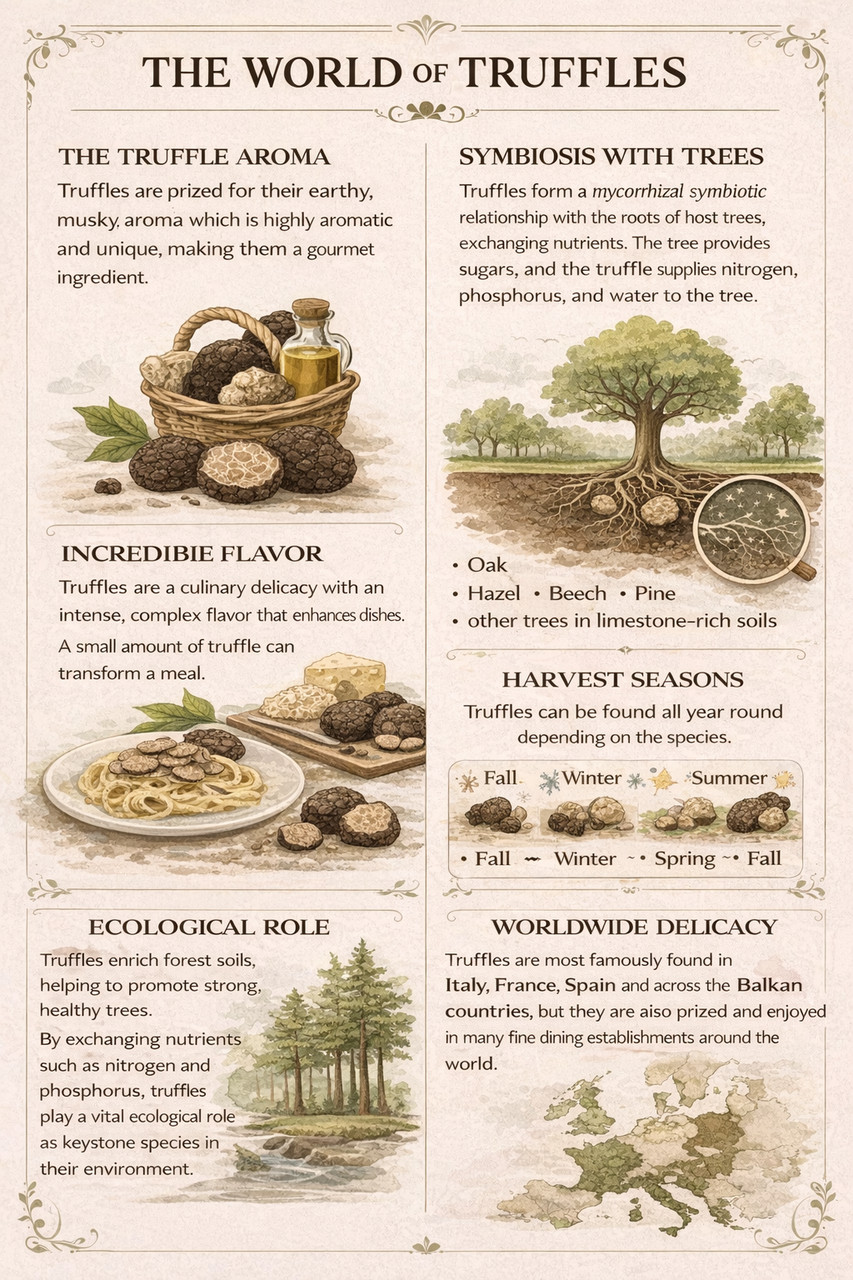
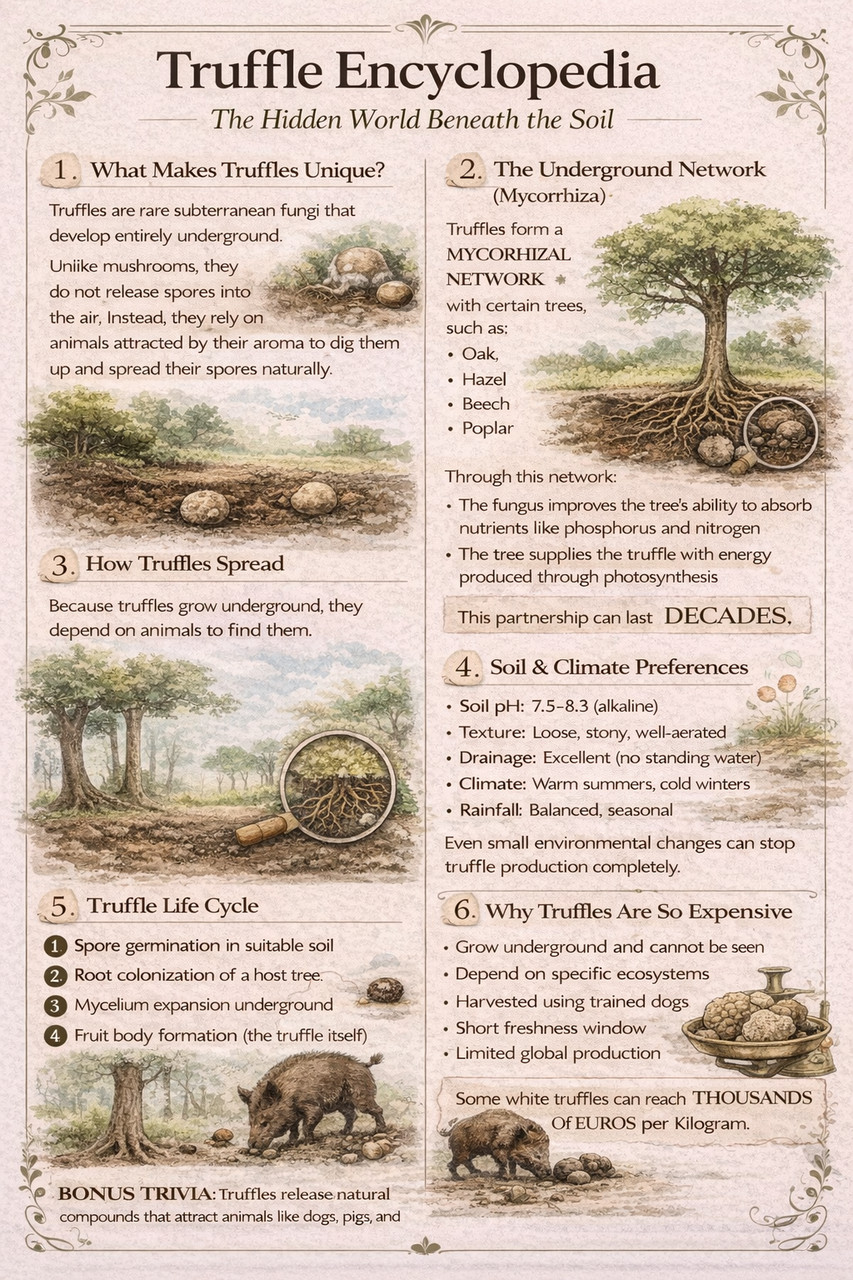
The genus Tuber are ectomycorrhizal fungi, meaning they form mutually beneficial relationships with the roots of certain trees. Their mycelium wraps around the tree roots to create a network called the Hartig net. This connection, called ectomycorrhiza, allows truffles and trees to exchange nutrients in a mutually beneficial partnership. The truffle provides minerals and water to the tree, while receiving sugars and carbohydrates produced through photosynthesis, which are essential for its growth and development. Common host trees include oaks (Quercus species), hazelnuts (Corylus avellana), beech (Fagus species), and pines (Pinus species). Without a suitable host tree, truffles cannot grow, making this relationship essential to their life cycle.
-
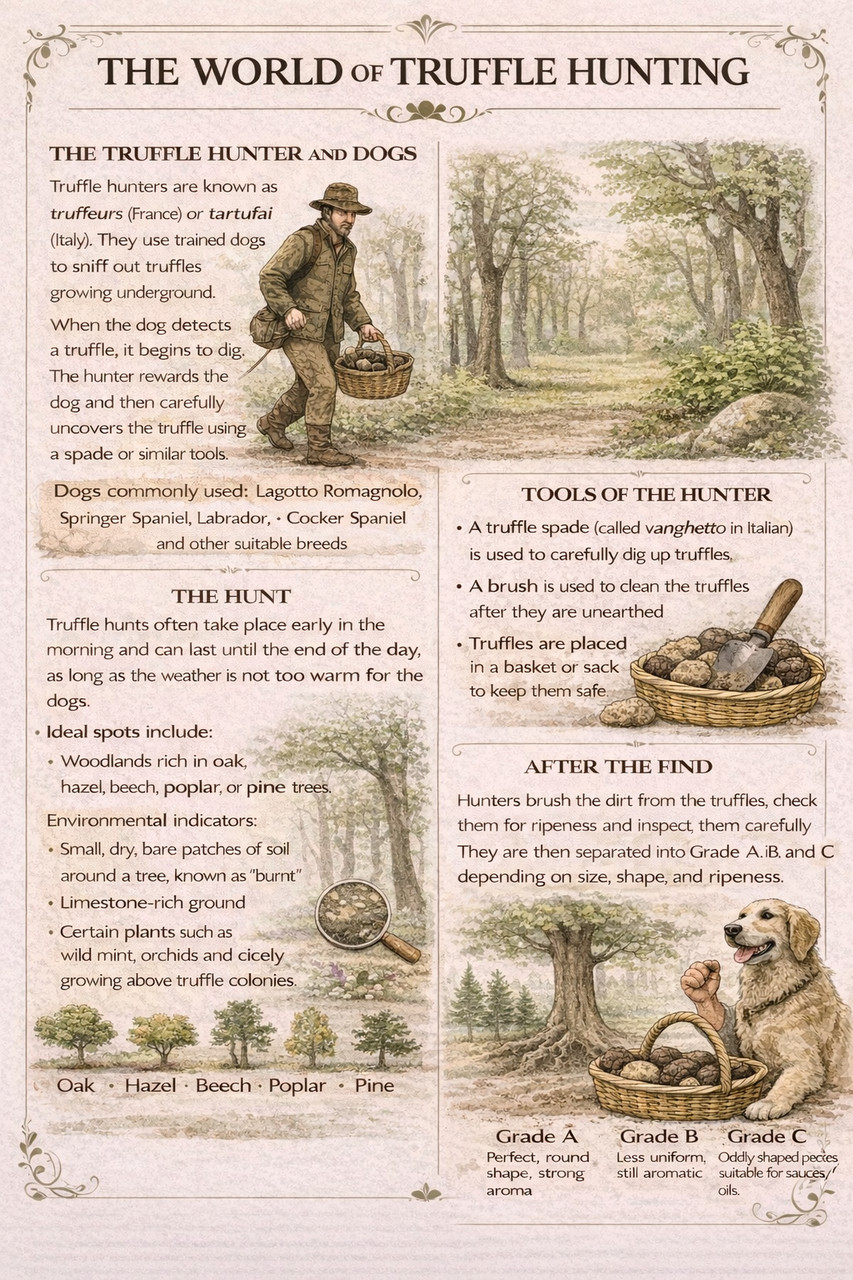
- truffle hunting
How Truffles Grow
Truffles grow underground, typically between 5 and 15 centimeters beneath the soil surface, but can be grow even deeper sometimes. The life cycle of a truffle begins with the dispersal of spores, often aided by animals that consume mature truffles and deposit spores elsewhere in the soil. If these spores land near suitable host trees, they germinate and colonize the roots, forming a mycelial network underground. After several years and with the right conditions, the mycelium develops its fruiting body, rich in aromatic compounds.
Interesting Fact: Their scent is partly meant to attract animals to help disperse spores.
Where Truffles Grow – Distribution
Truffles require very specific environmental conditions to thrive. They prefer limestone-rich, well-drained soils with a neutral to slightly alkaline pH. Seasonal climate changes, including warm summers, autumn rains, and cold winters, support their development. Additionally, the rich biodiversity of the forests and the varied morphology of the landscape create unique microclimates, allowing different species of truffles to flourish in harmony.
Truffles are native mainly to Europe, with the most famous production areas found in France, Italy, Balkan Peninsula and Spain. More recently, truffle production through cultivation has expanded to other parts of the world, including countries of South America, United States and Australia where suitable conditions exist.
Nutritional Profile
Beyond their culinary appeal, truffles are nutritionally remarkable. They are rich in carbohydrates, protein, and fiber, and contain essential minerals such as phosphorus, calcium, magnesium, manganese, and iron. Truffles also provide vitamins including B-complex and vitamin C and contain both saturated and unsaturated fatty acids. Scientific studies suggest that truffles possess antioxidant and antibacterial properties and may even have cancer-fighting potential, making them not only a gourmet delicacy but also a healthful addition to the diet.
Beyond nutrition, truffles are famous for their volatile aromatic compounds, including sulfur-containing molecules such as dimethyl sulfide, which give them their characteristic earthy and pungent aroma.
Truffle Cultivation
The cultivation of truffles, called trufficulture, involves inoculating seedlings with truffle spores in specialized nurseries. These inoculated trees are then planted in carefully prepared soil with suitable pH and drainage. Truffle cultivation requires patience, as it can take five to ten years before the first commercially viable truffles are produced. Farmers must carefully manage irrigation, soil conditions, and pests, and harvesting is often done with trained dogs or pigs that locate the mature truffles underground.
Interesting Fact: the precious white truffle Tuber Magnatum Pico is the only truffle that cannot be cultivated and that adds to its value and rarity other than the strong and pleasant aroma and flavor, which makes it more unique and special than the rest of truffles.
Historical and Culinary Significance
Truffles have been valued since ancient Roman and Greek times, both as a delicacy and for their supposed medicinal properties. In modern cuisine, truffles are celebrated for their ability to enhance dishes such as pasta, risotto, sauces, and oils. White truffles, in particular, are highly aromatic and can fetch thousands of euros per kilogram. Their rarity, subterranean growth, and strong aroma contribute to their reputation as a luxurious ingredient.
Ecological Role
Truffles play an important ecological role in forest ecosystems. Their mycelial networks improve soil health by aiding nutrient cycling and enhancing water absorption for host trees. Truffles also support biodiversity by providing a food source for wild animals. By promoting healthy trees, they contribute to the overall resilience and stability of forests.
✨ Want to learn more about the Magic of Truffle World firsthand?
Join us for a truffle hunting adventure where you’ll walk through beautiful forests, learn from us, and discover truffles with our trained dogs.